
Why the Best Tasting Room Technology Is Built from Behind the Bar
A paper binder doesn't scale to 800 members. Here is what working the floor teaches about where tasting room technology breaks, and how to build systems that actually hold up during a Friday night rush.
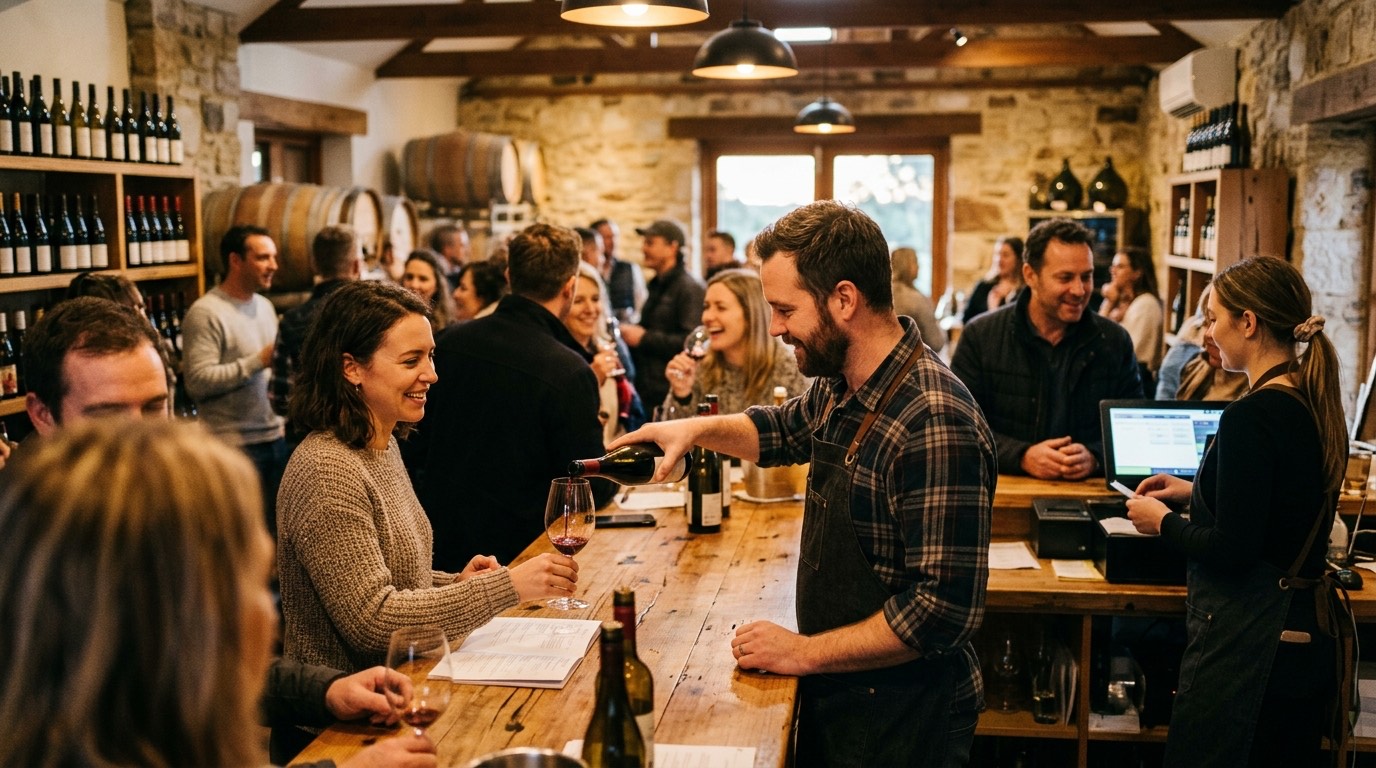
It’s 10:00 PM on a Friday. The last guests have walked out, the door is locked, and the floor is a landscape of empty glasses and crumb-strewn tables. You’re wiping down the bar, looking at the POS reports, and matching them against the manual sign-up binder.
That’s when the quiet leaks show up.
You realize that two guests who wanted to join the club walked away because checkout was backed up. A regular member paid full price because their digital perks didn’t load at the register, and the automated welcome email you promised to send new signups is still sitting unsent.
Most tasting room technology looks great in a vendor’s slide deck. It promises “seamless integrations” and “data-driven guest retention.” But those platforms are rarely designed by people who have had to manage a backup at the register while talking to a regular, pouring a flight, and covering for a staff member who called out.
The systems that run your tasting room shouldn’t get in the way of your hospitality. Designing them requires knowing what that FOH reality actually feels like.
What the Floor Teaches About Technology
I work the floor across two different channels of wine hospitality in Central Ohio: as a part-time tasting room attendant at a local wine lounge, and as a winetender at a high-volume retail bottle shop and tasting bar. Guiding guests through flights, talking wine clubs with regulars, and managing check-ins on busy weekends is where the software vendor’s promises meet operational reality.
Here is what working behind the bar teaches you about why tasting room systems fail, and how to fix them:
1. The Paper Binder Bottleneck
At the retail bottle shop, I’ve watched the operational strain of managing over 800 wine club members manually through paper binders. Without a digital member lookup, a QR code, or an automated check-in system, staff are forced to verify memberships and log pours by flipping through printed sheets.
Because it takes too long to do during checkout, check-ins are often deferred. When the bar gets busy on a Friday night, those manual check-ins are the first thing that gets forgotten. The result is bad data, missed visits, and a guest experience that feels manual when it should feel seamless. Paper binders simply do not scale.
2. The Invisible Ten-Second Friction
When a member’s club status won’t load at the register, the guest doesn’t think “there’s a system integration issue.” They think the venue doesn’t have its act together. That impression is set in about ten seconds — the exact amount of time it takes for staff to apologize and look up their details manually.
A digital member verification system that resolves in a single tap or scan isn’t a luxury. It is the difference between a professional guest experience and an awkward transaction.
3. The Narrow Window of the 8 PM Club Pitch
Guests are at the bar, the wine is in the glass, and the conversation is warm. That is when the club signup happens — or doesn’t. If the signup flow requires typing out a long form on three different screens at a busy counter, the staff will stop pitching it, the guest will disengage, and the moment is gone. Signup flows need to match the pace of hospitality, not the pace of a software onboarding.
4. Push Notifications vs. Email
When you send a Friday afternoon push notification to opted-in members — “New flights this weekend, including a limited pour of a vintage Cabernet Franc” — it lands with the warmth of a personal heads-up. Email has its place, but mobile push notifications build on the relationship that already exists in the room, bypassing a crowded inbox entirely.

What the Patterns Mean Operationally
When these systems break down, the response is often to blame the staff or request another software training session. But the real problem is structural: most hospitality software is built for corporate managers sitting in office chairs, not for the reality of FOH staff.
When your digital operations are disconnected:
- The club leaks members because there is no automated post-visit follow-up to keep them engaged.
- Staff ignore digital tools because they add steps to a busy shift rather than removing them.
- Decisions are made on guesswork because guest data is scattered across a website, a POS, and a spreadsheet.
Building from the Floor Up
Your digital operations should hold up under the exact same load as your physical space.
Enterprise technology experience—nearly 30 years of building systems for Fortune 500 brands and designing patented dynamic content architectures—teaches you how to build digital systems that don’t fall apart under load. It means CRM databases that remain clean, email automations that fire reliably, and integrations that don’t break when a software platform updates.
But enterprise architecture alone is blind to the reality of the floor. It doesn’t tell you how a busy staff member interacts with a screen while looking a guest in the eye, or how a slow check-in process ripples through a packed tasting room on a Saturday evening.
That is why the credentials that matter most aren’t just technical. Holding a WSET wine certification and an alcohol server license, and working part-time floor shifts behind busy local bars, isn’t about padding a resume. It is about closing the gap between the code on the screen and the glass on the bar.
When your digital systems are designed by someone who has built enterprise-grade platforms and also worked the shift that breaks them, you get technology that stays out of the way of your hospitality. You get systems that actually work behind the bar.
Where does your guest journey go quiet after the visit?
If you want to move away from paper binders and disconnected systems, you can learn more about how we work as a fractional digital lead. Or book an intro call and we’ll look at your current setup together.
Want a second set of eyes on your stack?
No sales script. We'll talk through your stack, your costs, and whether an audit makes sense.
Book an Intro CallThe Operator Note
One pattern. One quick win. Monthly.
No fluff, no agency-speak. Just what I'm seeing across tasting rooms and what's actually working.
You're in. First issue lands in your inbox soon.
