The Guest Who Almost Joined Your Wine Club
A guest asked about your wine club, then never joined. Here's why the 48-hour post-visit window determines whether interest becomes recurring revenue.
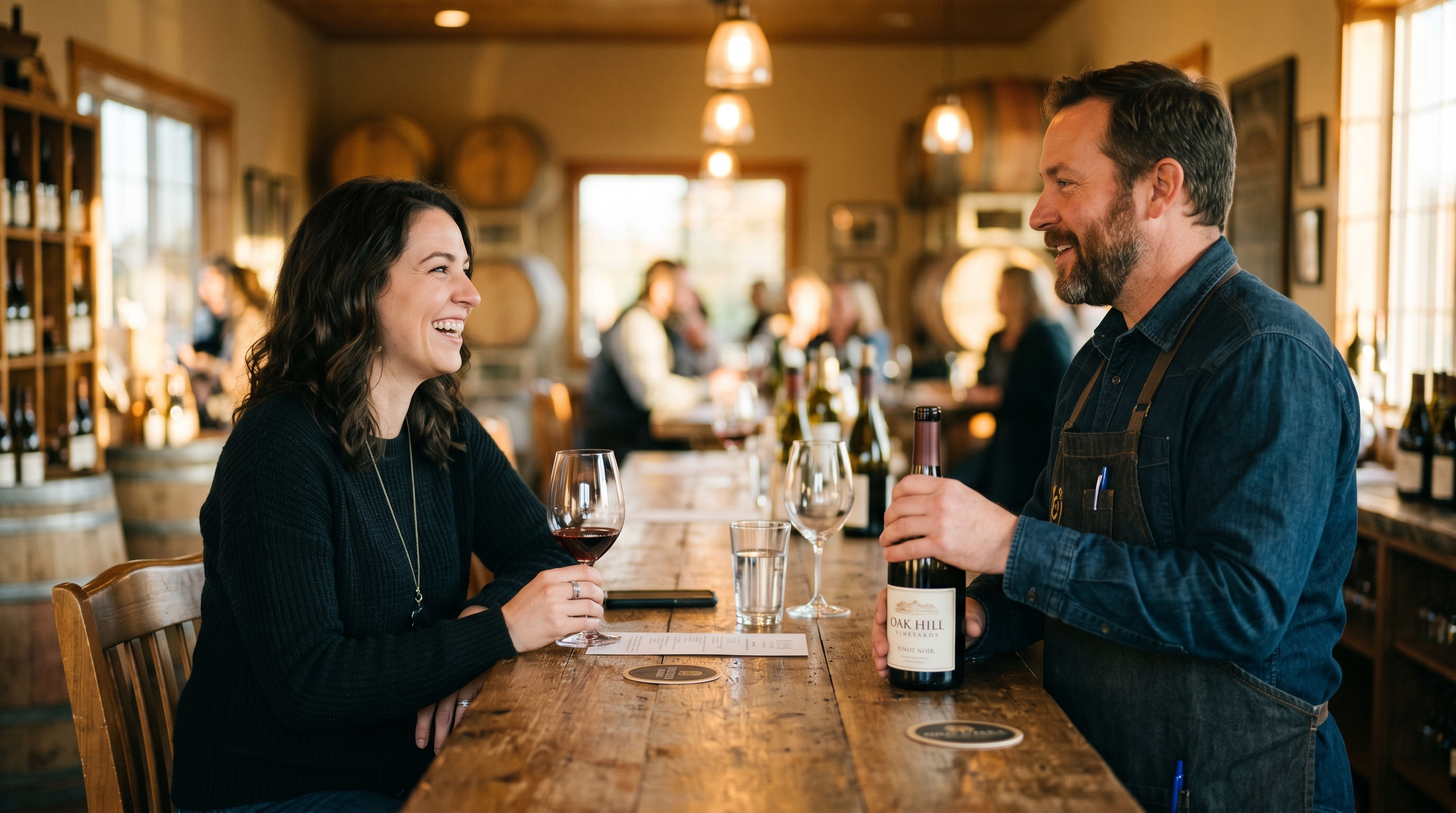
She was at the bar for two and a half hours. She worked through your current flight, asked about the library pour, and then — right at the end — turned to your floor staff and said: “Tell me about the wine club.”
Your team gave a great answer. Warm, specific, enthusiastic. They mentioned the allocation release, the member discount, the club-only events. The guest nodded, said “I’ll definitely look into it,” and left with a brochure and a good feeling.
That was three weeks ago. She never joined.
This isn’t a story about a bad experience. The tasting was excellent. The staff were excellent. The wines were excellent. This is a story about what happened — or didn’t happen — in the 48 hours after that conversation.
The Highest-Conversion Window You’re Not Using
The 48 to 72 hours after a first visit are the highest-conversion window in your club growth calendar. The guest is still thinking about the wines. The experience is fresh. If they said “I’ll look into it” at the bar, they meant it — in that moment.
What happens in most independent tasting rooms during that window is nothing.
No automated email. No club-specific follow-up. The guest either gets silence, or they get folded into a monthly newsletter that goes out on the first Tuesday of the month and leads with a food pairing.
By the time any communication arrives, three things have happened: the guest has visited two other wineries, their inbox has been hit by a dozen other lists, and the specific memory of your club pitch has faded into a general warmth toward wine that could convert anywhere.
Five Moments a Guest Decides to Join — and Where the System Fails
The decision to join a wine club doesn’t happen in a single moment. It builds across a series of touchpoints. Here’s where most tasting rooms lose it:
1. The bar conversation
A guest who asks about your wine club has already done 90% of the qualification work. They’re interested. They’re engaged. The in-person answer from your team is usually excellent — because great floor staff know how to handle this.
The failure comes next: there’s no automated capture of that moment. The guest’s email was collected at check-in, but the system doesn’t know they asked about the club. The post-visit sequence that fires is the same generic “thanks for visiting” email every guest gets, regardless of what happened at the bar.
2. The QR code that doesn’t go anywhere useful
Many tasting rooms have a wine club QR code on the table or in the brochure. The guest scans it. It goes to the winery homepage.
They click around for thirty seconds. They don’t find the club page. They close the tab.
A QR code should go to one page: a clean, mobile-optimized club signup page with a single CTA. Not the homepage. Not the “About” page. Not a page that hasn’t been updated since 2022.
3. The post-visit email that doesn’t mention the club
When the post-visit email arrives — if it arrives — it usually says some version of “Thanks for visiting. We hope you enjoyed your tasting.”
It doesn’t mention the wine club. It doesn’t include a direct signup link. It doesn’t reference anything specific about the visit or the conversation that happened at the bar.
At Uncorked Wine Tastings in Dublin, Ohio, the guest follow-up sequence before My Pub Marketing’s involvement was either absent or generic. After implementing a specific, timed post-visit flow, repeat visits increased 15% within 90 days. Email open rates went from 52% to 65.7% — running at nearly twice the hospitality industry average of 25–35%.
The difference wasn’t a redesigned website or a bigger email list. It was a well-timed message that arrived while the visit was still fresh.
4. The club page that doesn’t hold up
When a guest does go looking for your wine club — either from memory, from a brochure, or from a search — what they find often works against the conversion.
The club page describes the tiers but doesn’t answer the questions guests actually have: What do I get? When? How much? What happens if I want to skip a shipment? What does the member pricing actually save me on the bottles I bought today?
Mobile checkout that works in a test environment on a Tuesday afternoon often breaks on a busy Saturday when your tasting is sold out and a guest is trying to join on their phone at the bar. That moment — when the system fails at peak intent — is not recoverable.
5. The renewal email that doesn’t feel personal
Even members who joined are at risk. Wine club churn often isn’t dramatic — it’s quiet. An expired credit card that never gets updated. A renewal email that says “Dear Valued Member” and gets skimmed and deleted. A club pitch in the renewal sequence that sounds like it was written for someone else’s winery.
The guest who almost left your club looks a lot like the guest who almost joined: someone who needs one good, specific, timely message to stay on the right side of the decision.
What the Fix Actually Looks Like
None of this requires a new platform or a six-month tech project.
The core fix is a two-part sequence:
A 48-hour post-visit email that does three things: acknowledges the visit specifically rather than generically, introduces or reinforces the wine club with a direct link to the signup page, and makes the benefit immediate and concrete — something like “your member discount would have saved you $X on today’s order.”
A club-specific landing page that answers the five questions a guest has before they decide: what’s in it, when it ships, how much, what flexibility looks like, and how to join in under two minutes on mobile.
That’s the baseline. From there, a well-timed second message at seven days — for guests who opened but didn’t click — recovers a meaningful percentage of the “I’ll look into it” guests who slipped through the first window.
The Guest Who Almost Left
This pattern doesn’t stop at acquisition. The same guest who almost joined your wine club is, in two years, the member who almost left.
The credit card that expired and triggered a failed renewal. The member who got a generic “your shipment is being prepared” email with no excitement, no story, no reason to stay. The allocation release that arrived with no context about why these particular wines were selected for members this quarter.
Retention doesn’t require a loyalty program or a points system. It requires the same thing acquisition does: a well-timed message that feels like it was written for this person, arriving at the moment when the decision is live.
The Bottom Line
The guest who almost joined your wine club had a great experience. The problem isn’t hospitality — it’s the silence that followed. One automated email, timed right, with a direct link and a specific offer, is worth more than a new brochure, a redesigned homepage, or a bigger ad budget.
If you’re heading into summer tasting season without that sequence in place, you’re leaving club memberships — and the recurring revenue that comes with them — on the table after every flight.
Find out exactly where your tasting room’s revenue is leaking — in 5 minutes. Start your free Digital Leak Check
The Operator Note
One pattern. One quick win. Monthly.
No fluff, no agency-speak. Just what I'm seeing across tasting rooms and what's actually working.
You're in. First issue lands in your inbox soon.
